www.mumboracing.com



To learn more about the history of Mumbo Racing, click the different phases shown to the left.
For more information on the cars of Mumbo Racing, check out the Cars page
For more information on the drivers who've driven with the team, check out the Drivers page
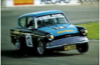
1997 - 1999
Club Cars
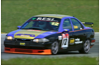
1999 - 2002
Super Touring
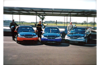
2002 - 2004
Team Mondeo
2005 - 2007
Open Season
2008 and beyond
Into the Future


Ford Anglia Cosworth | Improved Production Cars
Rod Dale's first racing car was a Ford Anglia. Built in the 1960's, Rod's car was typical of cars used in Australian motorsport in the era - a road car converted to racing spec, with modifications aimed at making it as fast as possible given the limited budget available. Rod progress onto various other cars, ultimately racing a 5-litre Chev-powered Sports Car. In the late 1970's with a young family, Rod's priorities changed, and his own racing was put on the backburner. He maintained an involvement in racing, working on Andrew Miedecke's Formula Pacific campaign in the early 80's, and various other cars during the 80's and 90's, including leading a crew running a car at Bathurst in 1992.
During this time, Rod's son, Sam had developed an interest in motorsport - initially racing motorcross bikes, but later turning his attention to cars, and his first up-close taste was that 1992 Bathurst, where he worked on the team. Sam visited Bathurst again in 1995, this time working on the Allan Moffat Cenovis-backed V8 Supercar driven by Andrew Miedecke.
Around that period, Sam, a keen reader of the 'Trading Post', had noticed a Ford Anglia for sale and mentioned it to Rod. Rod made a few phone calls, and bought the car sight unseen. It was transported to the team's workshop (garage) in Kempsey and Rod and Sam set about turning it into a hillclimb car.
The Anglia was initially fitted with a 1760cc Crossflow engine, and raced successfully at the local hillclimb track. The team spread further afield, racing at hillclimbs in Northern New South Wales, and sharing the driving duties. Rod acquired a rolling-chassis Sportcar - an AUSCAM, and separately bought the running gear from a Sierra Cosworth, the plan being to fit the turbocharged engine to the AUSCAM. With a lack of viable venues to race the AUSCAM if fitted with the non-original engine, and a lack of enthusiasm to run it with the original rotary engine, the AUSCAM was put back on the market, but the engine was put under the workbench.
Keen to do more than single laps at a time, Rod and Sam visited Oran Park for a test day in late 1996. The aim of the outing was to gain experience on a circuit (as opposed to a hillclimb track), and also to evaluate whether the Anglia could be competitive in the class it was eligible for - a category at the time known as 'Club Cars'. The test day was a success, with the Anglia lapping at a pace that would have put it in the top half of the Under 2 litre Club Car field. Sam was assigned driving duties, and Rod chief engineer.
Mumbo Racing was born.
The first race meeting was at the beginning of 1997, at Oran Park, and it was a disaster. The team hadn't detected any major problems during the earlier test day, but that was on the layout known as the 'South Circuit' - predominantly made up of left-hand corners. The first race meeting was on the GP circuit that had a number of right-hand corners, and caused the Anglia to suffer oil-surge. The oil-surge caused bearing failure, and an early end to the race meeting. Extensive modifications were made to the sump of the Crossflow engine, which reduced the oil-surge, but it was never totally eliminated. The team had learned that real racing cars use dry sumps.
The Anglia was a very competitive car during 1997, and always very well presented, but lacked the last few percent of pace to run at the very front of the field. The team decided that more power was required, and dragged the Sierra running gear from under the workbench. The engine was installed into the (tiny) Anglia engine bay, and would be used without the Sierra's turbocharger, it used a multi-throttle body fuel-injection arrangement instead, as well as some pretty fancy exhaust bends to clear the suspension towers and firewall. The new engine featured a dry sump.
The new configuration was a success, with the extra power enough to move the car toward the head of the field in terms of outright pace. The engine revealed a couple of other weaknesses though, with the brakes and suspension coming in for further attention to make the package consistent. Development of the car never really stopped during the whole time it was run by Mumbo Racing, and the best ever result came at the final time the team ran the car, at Queensland Raceway for the Improved Production 100 in 1999 (Club Cars had been renamed Improved Production in 1998). Another lesson was learned by the team - more power is useless without control (in the form of braking and handling).
The Anglia went through a continuous evolution, with power, braking, handling and driveline all receiving attention. It was involved in a couple of big accidents, but each time came back stronger and faster. The whole process taught the team about building and developing a car, about the compromises necessary when racing a production, road-based car. Most of all it taught the team about the importance of tenacity, and seeing problems not as problems but as opportunities to make something better for next time.
Ford Mondeo | Super Touring
In the early days of Mumbo Racing, Graeme Julius had become a de facto member of the team, through his expert dyno tuning of the Anglia's Cosworth engine. In 1999, Graeme got a lead on a Ford Mondeo Super Tourer about to come on the market (a car that Graeme had worked on previously). He mentioned it to Rod, and Rod mentioned it to Sam. The car was acquired by the team, and given a lot of TLC by Rod and Graeme, and debuted by the team at Goulburn's Wakefield Park.
Sam had never laid eyes on the car before he turned up at the circuit to drive it during Friday practice for a round of the Australian Super Touring Championship - it would be his first experience with a sequential gearbox, and the first time he had driven a front-wheel drive car. With a lot of help from the team, Sam managed to qualify 7th fastest for that first outing, and was enjoying his first race until he was turned around by another competitor, the car stalled and only rejoined the race after being towed to the pits and restarted - the team learned a valuable lesson: cars that require a jump battery to start in the pits won't miraculously start if they stall on the circuit. Sam learned another lesson - a car with power steering needs the steering wheel pointed straight ahead to avoid putting extra load on the (already heavily stressed) starting system.
The Mondeo proved to be a very reliable car, and relatively straightforward to drive. The highly tuned engine had a very narrow power band, and was only useful between around 6000 and 8500rpm. This was Mumbo Racing's first experience with this kind of engine where gearing is so important. The team learned quickly how to calculate the appropriate gear ratios, and put them to good use.
The front-wheel drive layout of the Mondeo, combined with a fairly significant front weight bias meant the Mondeo was very hard on it's front tyres, and barely used the rear tyres. Understeer was almost always present, and tyre management was another quickly learned skill the team acquired. Switching the underused rear tyres to the front helped with the balance of the car, and made certain the most was gotten from the expensive 19 inch slicks. The low profile slicks also didn't provide much protection to the rims - bouncing off the kerbs BTCC-style could quickly result in cracked rims, so the kerbs were avoided as much as possible to preserve the precious rims.
The Mondeo was campaigned in the BOC Australian Super Touring Championship, and then the ASTC, before it went on to be used in the Touring Car Challenge.
Many of the systems on the car were new to the team. The Proflex adjustable dampers fitted to the car proved to be an excellent unit, but came with no information on how to adjust or service them. The team taught themselves. The same could be said for the X-Trac 6-speed sequential gearbox - Graeme work out how to rebuild and service it. Adjustable dampers were an area focussed on in setting the car up - with no changes other than to the dampers, the front tyres could be made to work at 100% for just a couple of laps, or at 98% for a whole race. The driver adjustable anti-roll bars were also particularly useful for finetuning the handling of the car. The Mondeo was the first Mumbo Racing car with any kind of datalogging capacity, and it was fairly limited in that department - the team learned that datalogging is fine, and very useful for troubleshooting, but is not much use for driver development or setup without track mapping.
Most of all, the Mondeo was built from the start as a true racing car. Down to the smallest detail, like the throttle linkage, attention was paid to making everything perfect, and almost everything not designed to make the car faster had been removed when the car was built. Despite the outstanding efforts of Andy Rouse when building the car, it would always be a car that had been created around a road-going base. The car's character came from this fact.
Ford Mondeo | Nissan Primera | Toyota Camry | Super Touring
At the end of 2001, former Super Touring Privateer Champion, Peter Hills approached Mumbo Racing to run his two Mondeo Super Tourers. Hills had been impressed with the team's ability to get the job done in an affordable way.
As part of the deal, the running gear from the team's existing Mondeo would find a home in the chassis/body of Peter Hills' championship winning car, while Peter's running gear would be transferred to another chassis/body (ex-Paul Radisich World Cup car). The team would run both these cars, as well as a third car, all three in the newer body shape, and running under the "Team Mondeo" banner.
Preparation of the cars went well, but highlighted that every racing car is subtly different. Even though all three Mondeos shared the same body shape, and were built by the same constructor (Andy Rouse), the number of small differences was staggering. Pedal boxes, mounting brackets, engine ancilliary systems and more all required re-engineering to transfer the running gear.
2001 had seen the demise of the Australian Super Touring Championship, and the cars carried on to compete as Super Touring, and then as part of the Power Tour. Peter raced the lead car, Sam in another, and the third car was made available to a number of drivers, Grant Johnson being the most frequent.
In 2002, as part of the Power Tour, Sam made a brief foray into V8 Stockcars (ex-NASCAR cars), driving a Ford Thunderbird at Oran Park. You would struggle to find two more different cars than the Mondeo and the Thunderbird. One a right-hand drive, front-wheel drive, light, high-revving. The other left-hand drive, rear-wheel drive, heavy and with massive power. The laptimes proved to be similar though, Sam hopping (literally) from one car to the other for one round.
Late 2002 saw the acquisition of the Nissan Primera 96B - a very fast car, tuned to the edge of reliability. By early 2003, the Nissan Primera GT95 had also joined the team, along with the Peugeot 405. The Toyota Camry joining in early 2004.
The Power Tour folded in 2002, and Super Touring was again left to fend for itself. Rod and Garry Willmington became reacquainted, and in 2003 created the Touring Car Challenge, pitting Super Tourers against older V8 Supercars, Group A cars, and the Future Tourers. The format was popular, and there were plenty of cars around to join the ranks, although at one point the bulk of the Super Tourer contingent ran from the Mumbo Racing stable.
The Touring Car Challenge blossomed in 2004, running a five round series, with Mumbo Racing running up to five cars at a time.
Ford Mondeo | Nissan Primera | Hyundai Lantra | Super Touring
After successfully growing the Touring Car Challenge in 2004, Rod and Garry took on the job of running the Australian Motor Racing Series (AMRS) in 2005. The AMRS catered for a huge variety of categories, with a place for the Touring Car Challenge, and Formula 4000, plus Production Touring Cars, F3, Saloon Cars and more.
The Touring Car Challenge continued to offer great racing, and a finely tuned handicap format. The team ran Nissan Primeras, Ford Mondeos, the Toyota Camry and Peugeot 405 in 2005, 2006 and 2007. A great number of drivers enjoying success with the team.
Reynard 94D | Reynard 91D | Formula 4000
In late 2004, the team was introduced to Formula 4000 (previously known as Formula Holden) by long-time friend Ty Hanger. Ty had been competing in Formula 4000, and Sam was very keen to move into open wheelers. A test drive was scheduled in Ty's fathers car - a 92D Reynard at Wakefield Park. The test went well, and in late 2004 Mumbo Racing acquired four ex-F3000 cars from Fred Goddard Racing in the UK. Bart Mawer assisted with the purchase, and helped to load the cars into their shipping containers.
Two of the cars were earmarked for sale, and the other two prepared by Mumbo Racing for competition. 2005 would be the first year with a new engine in Formula 4000 - the new Holden Alloytech. The team worked hard to get the engine installed in 94D-007 - an ex-David Coulthard car, and soon to become Sam's new weapon. The installation went well, an the car was transported to Phillip Island where Sam was to have his debut. (Sam was living in Perth at the time, and would rendezvous with the team in Melbourne.) Possibly the country's most daunting circuit, in the country's fastest category - the perfect place for a debut! Some problems with corner-weights and drive shaft alignment meant that the car was quite twitchy to drive, and more than a little intimidating! There was plenty of time to get the niggles sorted for the next round at Queensland Raceway, and it proved to be a much more successful event - Sam was on the pace early, and after a disappointing DNF in race one, took fifth in race two - his first race finish in the category.
The second car - a Reynard 91D was made race ready for the final round of 2005, and hit the track with Brendan Julius at the wheel. Another successful debut.
2006 saw Mumbo Racing's first round win in Formula 4000, with Sam taking out the Adelaide International Raceway round of the championship. Matthew Fox also joined the team in 2006, taking over driving duties in the 91D.
In 2007, the category was renamed Oz BOSS, and allowed a wider variety of cars into the field. Sam took his first open wheeler race win at the first round at Wakefield Park. Ty Hanger proved dominant over the course of the year, but Sam was close behind at the rounds he could make (he spent half the year in the UK for work). Davide Amaduzzi joined the team in the 91D, and Adam Proctor purchased the 95D that was part of the initial purchase. Mathew Fox ran his own team in 2007, and became closely acquainted with the trials and tribulations of running a team!
Ford Mustang | Mitsubishi Magna | V8 Giants
The Touring Car Challenge in 2007 saw the creation of the V8 Giants subcategory - allowing a wider range of V8-powered cars to join the fun. Neil acquired a pair of Ford Mustang Cobra Rs from Melbourne, originally constructed by Prancing Horse Racing, and driven by John Bowe. The Mustang took a little work, but proved to be a very quick car when shod with good rubber. The engine note of the car is fantastic, and the sequential Holinger gearbox a pleasure to use. The car is close to V8 Supercar pace, but would need some weight reduction and power increase to be on an even footing.
Neil also acquired the Bond Roll Bars constructed Mitsubishi Magna Future Tourer as a starter for V8 Giants. It's a great car, and very sturdily made.
Mitsubishi 380 | Production Car
Attracted by the idea of racing a car straight off the production line, Neil acquired a Mitsubishi 380 VRX. The car was fitted with a roll cage, and delivered directly to Calder Park, where it was pressed into immediate service as a race car. The 380 is a solid car, with plenty of grunt from the V6 engine. It proved to be a strong performer in the Production Touring Car Championship. After some suspension upgrades from Drummond Motorsport, and some tweaking, the car was a regular placegetter in the Class B stakes. The 380 ran strongly in the AMRS 500, held at Wakefield Park.
Reynard 94D | Formula Tasman
In 2008, the Independent Race Series was formed. As part of the Independent Race Series, Formula Tasman was created to provide a place for a variety of open wheeler race cars to compete, and Sam jumped right in with his Reynard 94D - totally comfortable with the car by this stage, Sam took part in the abbreviated series in 2008, and then went on to win the Formula Tasman championship in 2009. Sam continues to compete in Formula Tasman, defending his championship in 2010.
Ford Mustang | Touring Car
The mighty Mustang continues to thrive in the Touring Car field. Neil Byers and Paul Leabeater have shared the driving duties, with Paul taking out Muscle Division at the first round of the 2010 Independent Race Series.
Mitsubishi 380 | Production Racing Car
Neil's Mitsubishi 380 took him to the Class B Championship in the 2009 Production Racing Cars. He returns to defend the championship in 2010.